


Understanding how plants have been traditionally used to support daily well-being, cultural practices, and balanced lifestyles
Reading time: 8–9 minutes
Edited by:Wellora Naturals
A relationship shaped by tradition, not quick results
Herbal remedies are often discussed today as part of modern wellness trends, yet their roots extend far beyond contemporary health culture. For most of human history, plants were not viewed as alternatives or supplements, but as integral elements of daily life. People observed how plants interacted with the body over time and incorporated them into routines that emphasized balance rather than immediate outcomes.
Unlike approaches that promise rapid or dramatic effects, traditional plant use developed gradually. Knowledge was built through repetition, seasonal awareness, and shared experience. Herbs were gathered, prepared, and used in ways that reflected patience and consistency.
For beginners, this perspective is essential. Herbal remedies are not about replacing medical care or forcing change. They are about understanding how humans have long worked with plants to support everyday life.
With this foundation in mind, it becomes easier to answer a basic but important question: what exactly are herbal remedies?
What are herbal remedies?
Herbal remedies are preparations made from plants or specific plant parts such as leaves, flowers, roots, seeds, or bark. They are traditionally used to support general comfort, balance, or well-being rather than to diagnose, treat, or cure diseases.
These remedies can take many forms, including:
- Herbal teas and infusions
- Decoctions made by simmering tougher plant material
- Powders derived from dried plants
- Oils, salves, and balms for external use
What distinguishes herbal remedies from pharmaceutical products is their context. They are rooted in cultural practices and long-term observation rather than standardized clinical protocols. This difference shapes how they are used and what can reasonably be expected from them.
Understanding what herbal remedies are also involves understanding where they come from.
To explore that, it helps to look at their historical background.
A brief history of traditional plant use
The use of plants for well-being appears in nearly every known culture. Archaeological records and ancient texts show that societies across Asia, Africa, Europe, and the Americas relied on plants as part of daily living.
In many traditions, herbal knowledge was passed down orally. Families and communities shared information about which plants were gathered at certain times of year and how they were prepared. This knowledge evolved slowly, shaped by environment and experience.
These practices were not static. Trade, migration, and cultural exchange influenced which plants were used and how they were prepared. While modern science now studies many of these plants, traditional knowledge remains the foundation of herbal practices.
Recognizing this history helps beginners appreciate herbal remedies as part of a living tradition rather than a modern invention. From here, understanding how herbs are prepared helps connect tradition to practical use.

Common forms of herbal remedies
Herbal remedies are prepared in different ways depending on the plant part used and the desired application. Each method reflects traditional approaches designed to work gently with the plant.
Infusions (Herbal Teas)
Infusions are made by steeping soft plant parts such as leaves or flowers in hot water. This is the most familiar and beginner-friendly method and is often used as part of daily routines.
Decoctions
Decoctions involve simmering harder plant parts like roots or bark for longer periods. This method is traditionally used when more heat and time are needed to extract compounds.
Powders and Capsules
Plants may be dried and ground into powders, sometimes placed into capsules for convenience. While common today, this form is more modern than traditional preparations.
Oils and Topical Preparations
Some herbs are infused into oils and applied externally as part of traditional skin or body care practices.
Each form offers a different way to engage with herbal remedies. Once preparation methods are clear, many beginners naturally ask which herbs are most commonly used.
Popular herbs traditionally used by beginners
Certain herbs appear repeatedly across cultures due to their accessibility and versatility. These plants are often familiar because they are also used in cooking and beverages.
Examples include:
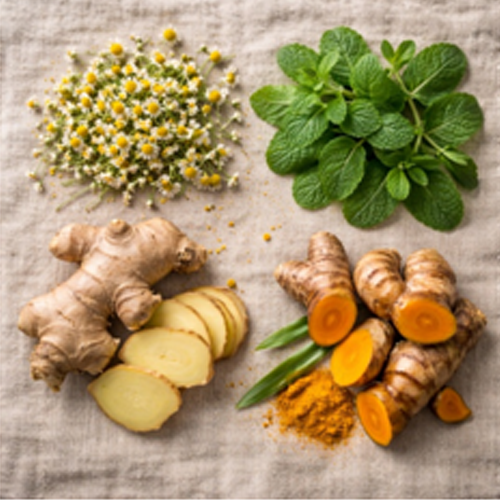
- Chamomile, often associated with calming evening routines
- Peppermint, commonly prepared as a digestive tea
- Ginger, widely used in both culinary and traditional contexts
- Turmeric, historically valued in food and cultural practices
These herbs are frequently recommended for beginners because their traditional use is well-documented and they are easy to prepare. Familiarity makes learning more approachable and reduces unnecessary complexity.
Understanding individual herbs also highlights an important theme: herbal remedies are rarely used in isolation. This leads naturally to exploring how they fit into everyday life.
Herbal remedies as part of daily routines
Traditionally, herbal remedies were woven into daily habits rather than used occasionally. Drinking herbal tea, cooking with herbs, or using infused oils reflected a routine-oriented approach.
This pattern emphasizes consistency over intensity. Instead of focusing on immediate effects, traditional use prioritized how the body responded over time. Herbal remedies became supportive elements within a broader lifestyle.
Modern wellness perspectives increasingly recognize the value of this approach, emphasizing habits and environment over short-term interventions. However, understanding their role also requires acknowledging what herbal remedies are not designed to do.
Understanding the limits of herbal remedies
Herbal remedies are sometimes misunderstood due to exaggerated claims or unrealistic expectations. Traditional use does not guarantee the same experience for everyone, and responses can vary widely.
Important limitations include:
- Effects are often subtle and gradual
- Traditional use does not equal scientific proof
- Individual responses differ
Viewing herbal remedies as supportive rather than corrective helps maintain realistic expectations. They are not meant to override the body, but to work alongside it. Recognizing these limits naturally leads to an important consideration: safety. Responsible use begins with understanding how to approach herbs safely.
Safety and responsible use
Although herbs are natural, they are biologically active. Responsible use involves awareness and education rather than assumption.
Key safety principles include:
- Introducing one herb at a time
- Being mindful of interactions with medications
- Choosing reputable sources
- Paying attention to personal responses
Organizations such as the National Institutes of Health and the World Health Organization emphasize that “natural” does not automatically mean risk-free. Safety is about informed decision-making, not fear. Once safety is considered, product quality becomes equally important.
Choosing well-sourced herbs helps support responsible use.
How to choose quality herbal products
The quality of herbal products can vary significantly. Factors such as sourcing, harvesting methods, and storage all influence consistency.
When selecting herbal products, look for:
- Clear labeling of plant names
- Minimal additives or fillers
- Transparent sourcing information
Products that promise guaranteed or dramatic results should be approached with caution. Trustworthy brands tend to focus on education rather than persuasion. With quality products selected, beginners often wonder how to start without feeling overwhelmed.
A simple approach can help build confidence gradually.
How beginners can start with herbal remedies
Starting with herbal remedies does not require extensive knowledge or complex routines. A gradual approach allows learning through experience.
Beginner-friendly steps include:
- Choose one familiar herb
- Use simple preparations such as tea
- Maintain consistency
- Observe how it fits into daily life
This method mirrors how traditional knowledge developed through patience and observation rather than rapid change. As confidence grows, questions about science and tradition often arise.
Traditional knowledge and modern perspectives
Modern research has begun examining many plants used in traditional practices. Scientific studies often focus on isolated compounds, while traditional use considers the whole plant and context.
Both perspectives offer value. Science provides controlled insights, while tradition reflects long-term human experience. Understanding their differences helps beginners avoid confusion and unrealistic expectations.
Rather than choosing one over the other, a balanced view allows herbal remedies to be approached thoughtfully. This perspective leads naturally to a grounded conclusion.
Final thoughts: approaching herbal remedies with balance
Herbal remedies represent a long-standing relationship between people and plants. They are not shortcuts or replacements for medical care, but supportive practices shaped by culture, observation, and routine.
For beginners, the goal is understanding rather than transformation. When approached with patience and respect, herbal remedies can become part of a balanced lifestyle that values consistency over control.
Transition to continued learning: Exploring individual herbs and their traditional uses is often the next natural step for those who wish to deepen their knowledge responsibly.
Sources
- National Institutes of Health
- World Health Organization
- National Center for Complementary and Integrative Health
Frequently Asked Questions About Mental Wellness
What does mental wellness really mean?
Mental wellness refers to the ability to manage thoughts, emotions, stress, and daily challenges in a balanced and adaptive way. It is not about constant happiness, but about maintaining psychological stability and resilience over time.
Is mental wellness the same as mental health?
No. Mental health typically refers to diagnosable conditions or clinical status, while mental wellness focuses on daily functioning, emotional regulation, and coping capacity regardless of diagnosis.
Why is mental wellness important in everyday life?
Mental wellness influences how people handle stress, make decisions, maintain relationships, and sustain focus and energy. Strong mental wellness supports long-term well-being and adaptability in changing environments.
Can someone have good mental wellness without feeling happy all the time?
Yes. Mental wellness does not require constant positive emotions. Experiencing a full range of emotions while being able to recover and regain balance is a key aspect of mental wellness.
What factors influence mental wellness the most?
Mental wellness is shaped by multiple factors, including sleep quality, stress levels, thought patterns, emotional awareness, physical activity, social connection, and daily routines.
How does stress affect mental wellness?
Short-term stress can be adaptive, but chronic stress without recovery may disrupt emotional regulation and mental clarity. Mental wellness depends on how stress is processed and balanced with rest.
Is mental wellness something you can improve over time?
Mental wellness can be supported through consistent habits such as regular sleep, structured routines, emotional awareness, and stress management practices. It develops gradually rather than through quick fixes.
Does mental wellness require professional therapy?
Not always. While professional support can be helpful for some individuals, mental wellness also includes everyday self-regulation skills, lifestyle balance, and supportive environments.
How is mental wellness related to lifestyle habits?
Lifestyle habits like sleep, movement, nutrition patterns, and daily structure influence nervous system regulation, which plays a key role in mental wellness.
Can mental wellness change during different life stages?
Yes. Mental wellness naturally fluctuates during periods of transition, increased responsibility, or change. Strategies that support mental wellness may need to adapt over time.
Is mental wellness a fixed personality trait?
No. Mental wellness is a dynamic process that responds to internal and external conditions. It is not determined by personality alone.
Why is mental wellness often misunderstood?
Mental wellness is sometimes confused with positivity, motivation, or productivity. In reality, it is about balance, recovery, and adaptability rather than constant performance.
What is the role of emotional regulation in mental wellness?
Emotional regulation allows individuals to experience emotions without being overwhelmed. This capacity supports psychological balance and long-term mental wellness.
How does sleep impact mental wellness?
Sleep supports emotional processing, attention, and stress regulation. Inconsistent or insufficient sleep may negatively affect mental wellness over time.
Is mental wellness supported by scientific research?
Yes. Organizations such as the National Institutes of Health and the American Psychological Association highlight the role of emotional regulation, stress management, and lifestyle factors in psychological well-being.
